
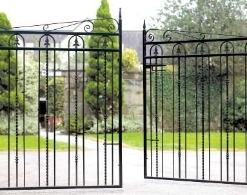


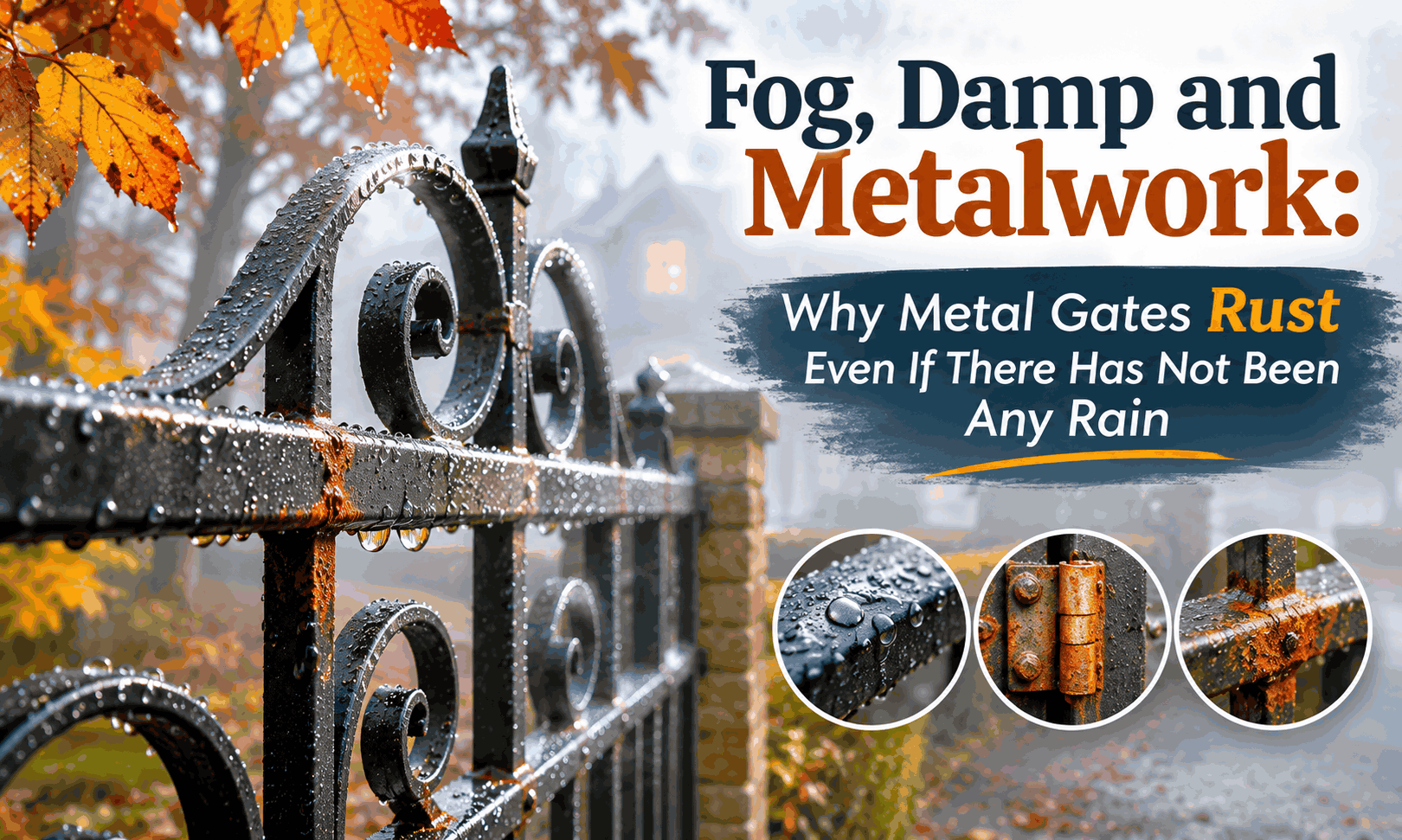
Ask people – “when do your metal gates begin to rust?” and the majority of the people will answer - after the rain. However, many metal gate owners have seen that the rust begins to appear after a week of the dry and foggy weather. Early November's weather forecast will explain the situation very well – the weather includes the high pressure, fog up to the afternoon, bright and chilly night with no rainfalls, and yet the surface of the metalwork of the gate can remain moist for most of the week.
What Does Rust Need?
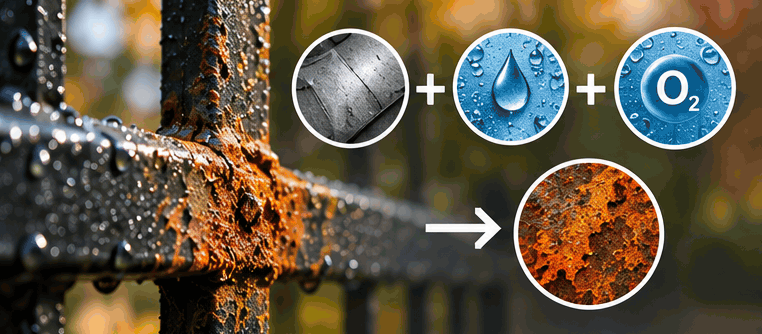
The rust is the chemical process of interaction of iron and oxygen with water. The thin film of moisture may start the rusting process on the metal surface and continue the corrosion as long as the surface remains wet. When the surface is dried, the process of rusting stops.
The conclusion is quite obvious from the statement above – the time of wetness is as important as the amount of rainfalls.
Why Does November Weather Keep Metal Gates Wet?

In the summer, rain dries quickly due to warm air, bright sun and wind. November weather works differently – the rain may remain on the metal surface for a couple of days.
Weak sun – it is less bright and lower, so it does not warm.
Calmed air – high pressure leads to calm weather. No wind gives more chances to moisture to remain on the surface of the metal.
Fog and mist – the fine layer of moisture appears on all surfaces and stays there during the whole day until it disappears.
Chilly nights – the clear sky cools the metal to the temperature lower than the surrounding air temperature, so the moisture condenses on it. Usually the metal gates are cooler than the surrounding air, so the appearance of the dew becomes quite normal.
Short days – the period of drying shortens with decreasing length of the day.
So, the gate installed on the northern side of the building can remain wet during several days without falling anything from the sky.
Where Moisture Stays Longer
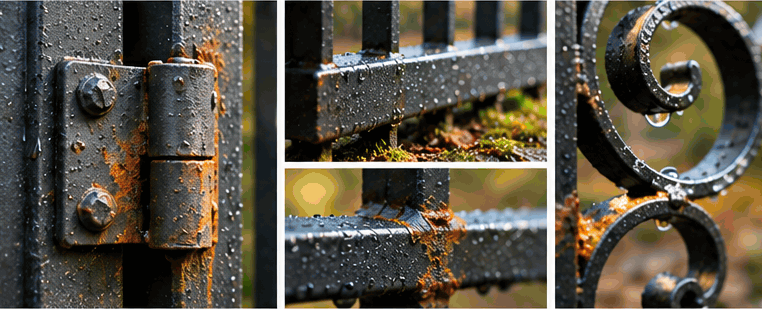
The moisture does not cover the surface of the metal uniformly – it stays longer in places where the airflow is the weakest and the water drains slowly, and there is the place where the rust begins to appear:
On hinges and hinge barrels – in the place where the moisture stays between moving parts.
Under the horizontal rails – where the metal stays wet and invisible.
In joints and welds – where there are gaps for the water to stay.
On decorative scrollwork – where the water drops stay between curves.
At the bottom of the gate and posts – where the metal is closer to the damp ground.
Behind plants and climbers – where the air flow is the least.
The rust seen on the surface of the gate is often the beginning of the problem which appeared in one of the mentioned places.
What Does the Moisture Contain
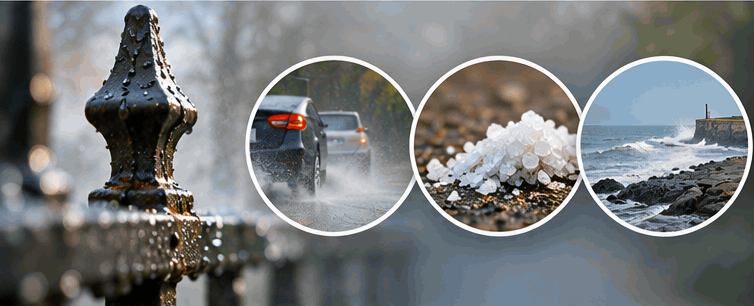
The water is not the only element. The film of the moisture also contains everything that covered the metal surface. It may contain the road salt spray, grime from the traffic, pollutants, and salt for the gates close to the sea.
It is one of the reasons why the metal gates installed near the busy roads or close to the sea tend to rust quicker than the gates installed in quiet inland locations, although the weather is the same.
Actions to Take in November
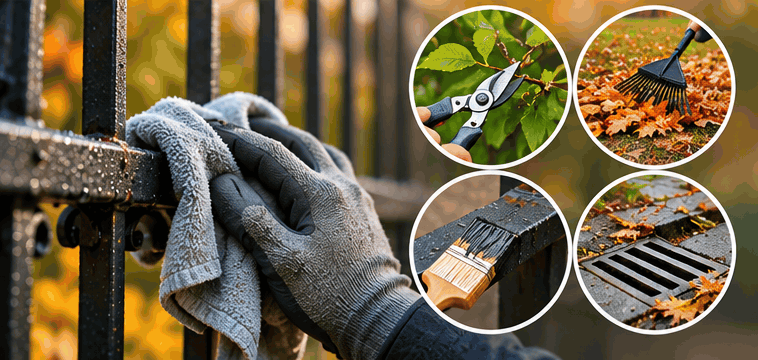
You cannot change the fog or the cold night but you can reduce the time when the metal will be wet and detect possible problems which could turn into serious trouble.
Make sure there is a good air circulation. Cut the shrubs, the climbing plants and the overhanging branches to make sure the gates and railings will not have any damp foliage around them.
Remove all the debris. Wet leaves collected on the bottom of the gate or near the railings will keep the metal wet.
Dry the left moisture. Next morning it will take you one minute to dry the moisture on the hinges and lower rails using a dry cloth.
Inspect the hard-to-reach places. Check if there is any staining or flaking paint under the rails, hinge barrels and the bottom of each post.
Fix any damaged parts immediately. Bare metal rusts faster than any other material. Touch-up painting is done at dry and cold but not frozen surface, so it is better to discover the problem in November and fix it on the dry day rather than painting the wet metal.
Inspect the ground. Standing water, clogged drainage and piles of dirt around the metal will keep the bottom of the gate wetter than needed.
Another Point of View on Rust

Usually the rust develops slowly and steadily, and it is quite easy to detect it early. Examine your gates and railings during the winter, pay attention to the areas where the moisture tends to stay and solve small problems while they are small. In the spring, you will know the exact spots for further work.