

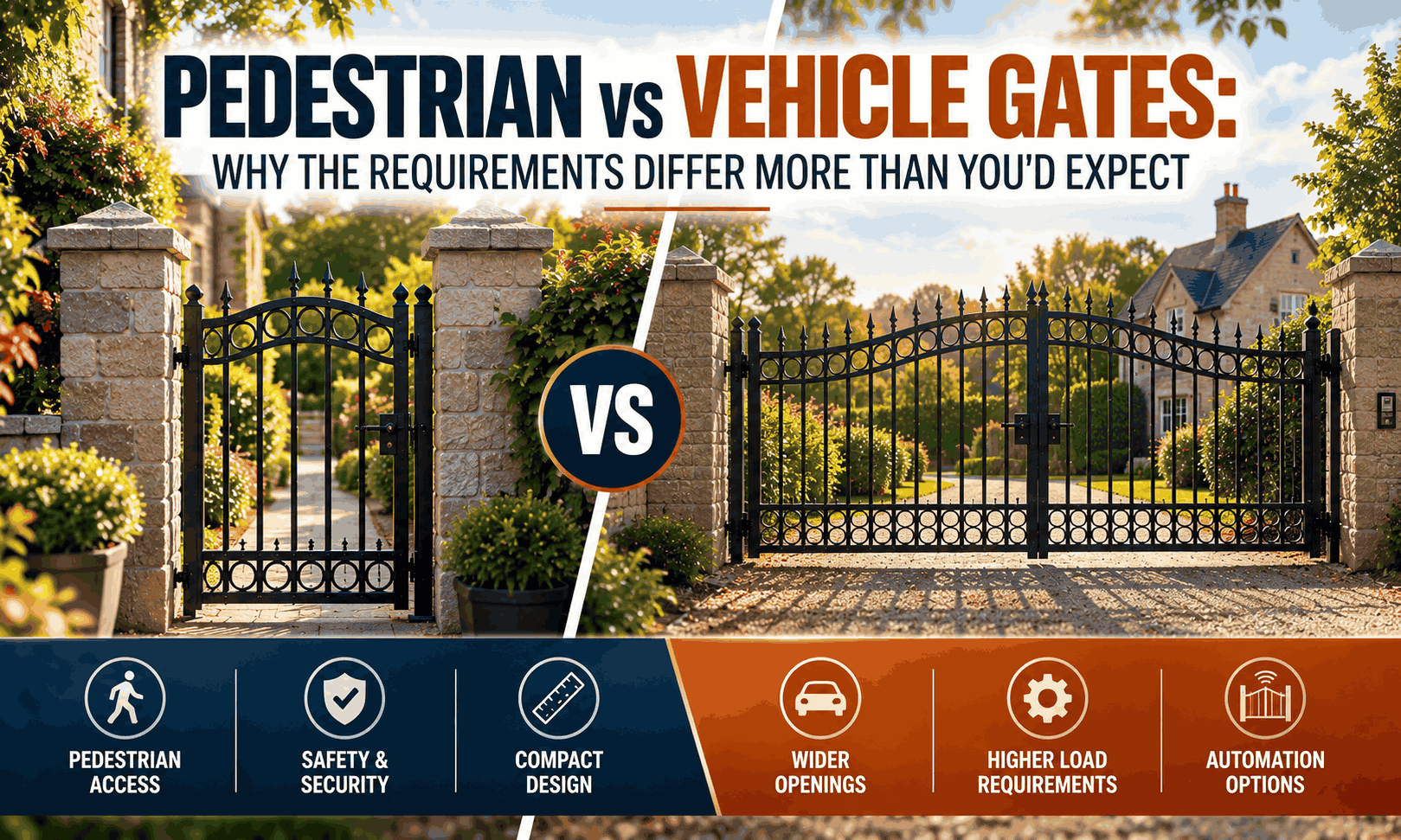
The assumption catches many homeowners off guard. Gates are gates – you just select a good design, measure a width you want, and that's all. Pedestrian gates go side-by-side with driveway gates, the design is the same, the manufacturer is the same, and both gates come at the same time. What can possibly go wrong? In fact, there are quite a few things which can go wrong!
Structural Engineering: The Load Difference
This is where the whole difference starts and this is why it really matters.
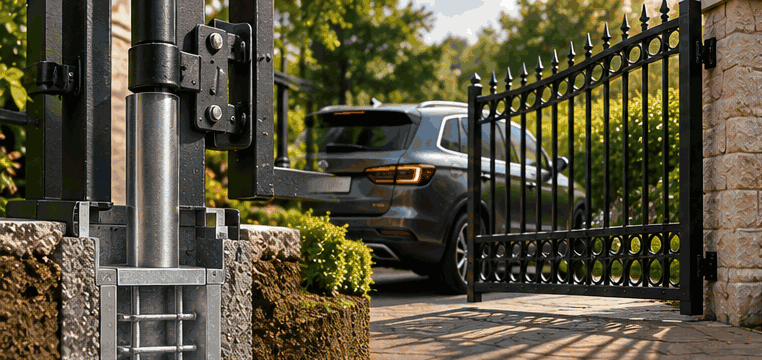
Vehicle gates operate under different forces than pedestrian gates. Wind load is the key force in terms of structural considerations and wider gates provide much more surface area for wind action. Two gates with the total width of 3.5 meters can produce huge forces on posts and hinges during stormy weather. The structural calculations of required post depths, concrete specification, and hinge load capacity become different when gate widths become wider.
Pedestrian gates with width from 750mm up to 1.2 meters experience lesser wind loading. Forces are much smaller and structural requirements are not as strict. Posts don't have to be as deep as in case of vehicle gates. Haunching of concrete foundation is not as extensive as well. Hinges designed for pedestrian gates will simply fail if used for vehicle gates.
Height Restrictions: How They Differ
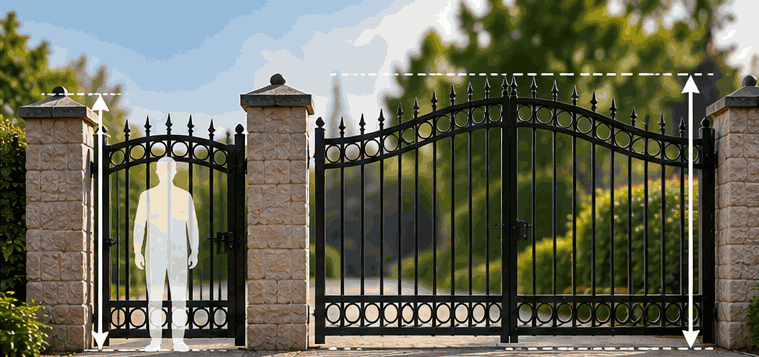
There are height restrictions for both pedestrian and vehicle gates if they are located adjacent to public highways, but there are some differences in these restrictions.
One meter height limit in planning regulations for gates adjacent to a highway or adjoining a public highway is universal and it can be exceeded without planning permission with the risk of being enforced. However, the practical interpretation of this limit differs for vehicle gates and pedestrian gates because there is an allowance to install dropped kerbs for the vehicle gates and that allows installation of vehicle gates.
Pedestrian gates in front boundary position – beside a path from pavement to front door – have stricter practical limits because their installation and functions are related to the absence of vehicle access infrastructure. The gate which is higher than one meter in the case of front pedestrian gate can require special considerations if it is located in the conservation area or adjacent to the classified road.
Correct understanding of the restrictions for different gate types installed at different locations is the way to avoid planning problems or enforcement action.
Proportions and Visual Integration
This is where the difference between the pedestrian and vehicle gates creates the aesthetic problem for many installations.
Pedestrian gates work on the human scale. Their proportions should match the human dimensions and architectural scale of the property. Pedestrian gate which is too high for its location looks severe. The gate which is too short looks inadequate. The proportionate relations between the gate height and boundary elements around it, between the gap between bars and width of the gate frame, between complexity of decoration and gate opening width – all these should be taken into account when the human scale is taken as a starting point.
Vehicle gates work on a different scale. Their wider openings require different proportional thinking. The design elements which look balanced for 900mm pedestrian gate will look sparse for 3.5-meter vehicle gate pair with the same pattern. The design elements should be scaled in order to preserve the visual impact on larger openings.
All our Abbey, Classic, Saxon, and Warwick designs can be easily transferred from pedestrian gates to vehicle gates taking proper proportions into account. The problem is the misconception that matching design names is enough for creating harmonious proportions between different gate sizes.
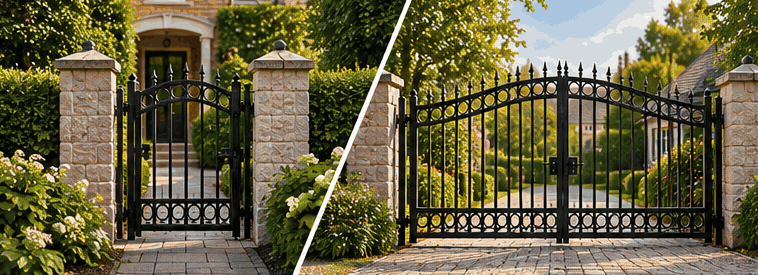
Combining Pedestrian and Vehicle Gates Properly
Installation of both pedestrian and vehicle gates simultaneously at a property allows proper thinking about each gate individually before considering how they can work together.
First, the requirements for vehicle gates should be established. These are the most demanding requirements and determine the post specification, foundation depth, and hinge capacity. Pedestrian gate requirements can be taken into account in this context – they are rarely the critical factor.
Next, the usage patterns for each gate should be considered. Who opens the pedestrian gate, how often and under what conditions? It determines the appropriate hardware independently of vehicle gate requirements.
And then visual integration should be considered – how these two gates fit in the view from the street, do the design elements need adjustment of proportions between sizes of the gates, and how these gates relate to the boundaries.