


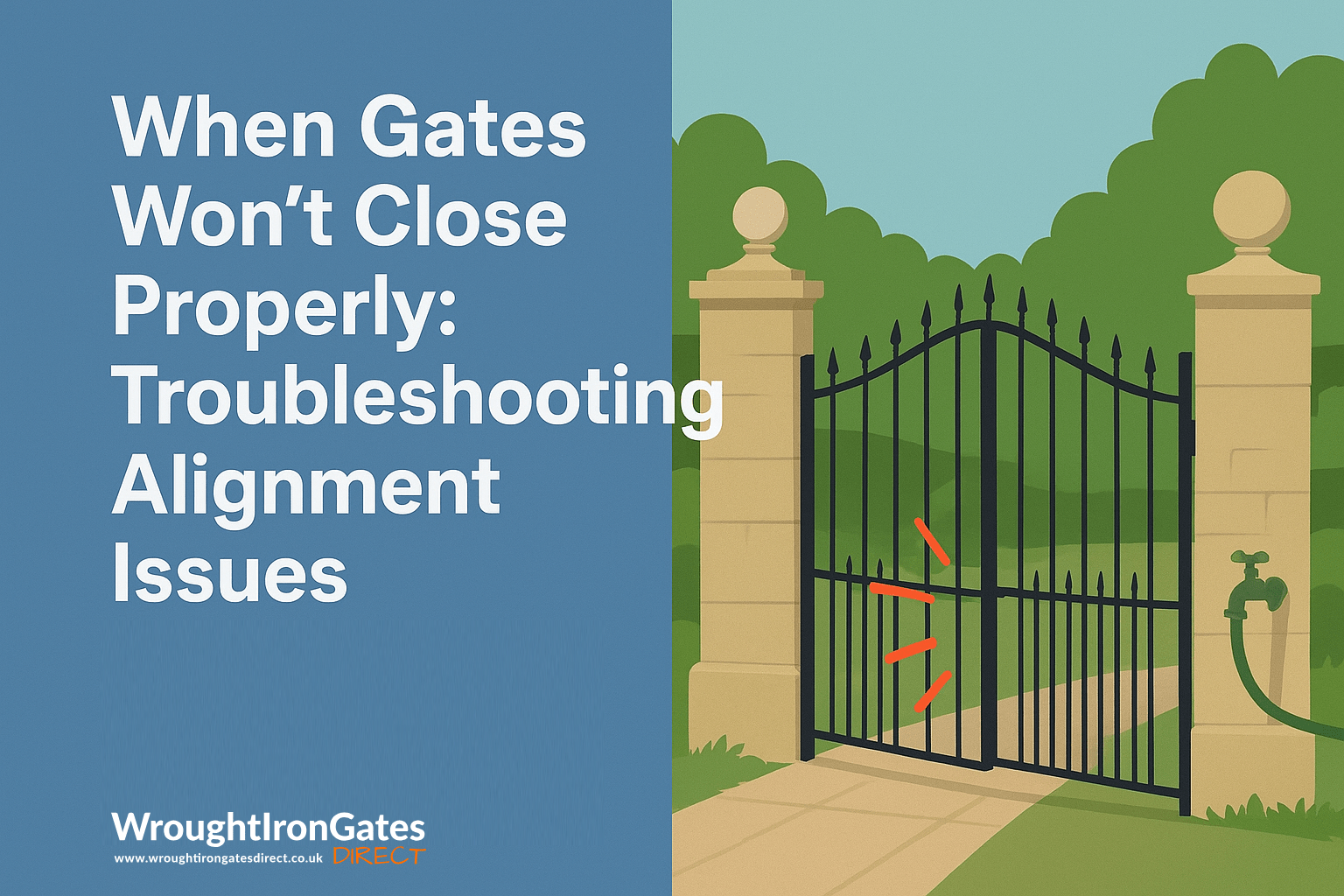
In our experience, one of the most frustrating property maintenance issues include - gates that won't close properly. The problem develops gradually. First, the latch catches slightly awkwardly. Then you're lifting the gate to engage the latch. Eventually, you're forcing it closed and hoping it stays shut.
Most homeowners assume major repairs are in order. New hinges. Rebuilt posts. Complete replacement. More often than not, the actual problem is simpler and far cheaper to fix. Understanding what causes alignment issues and how to diagnose them systematically prevents unnecessary expense.
Winter makes alignment problems more obvious. Gates that closed acceptably through summer suddenly won't latch after autumn rain, for then which the problem then culminates in Winter. These issues were developing all along, its just the seasonal changes just exposed them.
Where to Start -- Begin with Visual Inspection
Close the gate and step back. Look at gaps around the whole perimeter. Consistent gaps indicate that the gate itself remains square even if positioning is wrong. Uneven gaps mean either the gate has distorted or the posts have moved.
Top gap wider than bottom? Gate has dropped or the hinge-side post has settled.
Bottom gap wider? Less common but indicates the latch-side post has dropped or the gate has bowed upward.
Post Movement Solutions
Minor movement sometimes responds to packing and wedging. Drive wooden wedges between post and concrete to eliminate flex. This works only for very slight movement – millimetres not centimetres.
Greater movement involves rebuilding footings. Dig around the post. Pour in new concrete, mixed correctly, and well compacted. Allow it to fully cure before rehanging the gates. The time and labour often can outweigh the cost of installing new posts.
Posts rotted at base or rusted through should be completely replaced. No repair is economically available. New posts imply rehinging the gates, which may reveal other problems with the condition of gates.
Hinge Degradation
Hinges bear all the weight of a gate plus any operational forces. They will eventually wear out through the thousands of opening cycles. This type of wear is not overtly recognisable until such times when the alignment problems come along.
Check each hinge for its consistency. This means grasping the gate near each hinge and attempting to move it perpendicular to swing direction. Sound hinges show no movement. Worn hinges allow visible play. This play from multiple hinges accumulates, causing gates to drop significantly.
Inspect hinge pins. The wear of a pin develops grooves from bearing loads. A groove becomes noticeable by the shiny, worn area. Once a pin wears grooved, the damage progresses rapidly. Worn pins should be replaced before further damage is caused.
Look where hinges mount: Sometimes, the timber around such fixings becomes compressed or damaged, screw holes enlarge, and/or wood splits due to stress. Metal posts may show deformation at hinge mounting points. Such mounting failures cause misalignment even when hinges themselves remain sound.
Hinge Solutions
Worn hinges need replacement. Trying to repair worn hinge pins or bushings rarely works satisfactorily. New hinges cost a fraction of having to deal with gates that won't close properly.
Mounting point problems are trickier. Timber with enlarged screw holes needs repair before new hinges will hold. Options include: drilling out damage and fitting hardwood dowels; using larger diameter screws with wood filler; or installing hinge backing plates to spread loads across larger areas.
Various metal post deformations require welding repairs or reinforcing plates, a task that requires professional metalwork skills. Amateurish attempts usually aggravate the problem.
Gate Sag and Distortion
The gate itself can distort over time. Diagonal bracing loosens, joints open, the gate's own weight pulls it out of square. This happens gradually - imperceptibly day-to-day but obvious comparing photos from installation.
Check that the gate is square: Measure the diagonals from corner to corner. If the diagonals are equal, then the frame has stayed square. If the diagonals are unequal, then it has distorted. The difference will tell you how badly the gate has racked.
Inspect all joints with due care. Mortise and tenon joints open as timbers shrink or adhesives fail. Bolted joints loosen when the fixings work free. Ledge and brace gates suffer when the diagonal bracing loosens.
Check for cracks or splits: These show structural stress. The gate is trying to twist or bend, and the timber is failing. Small cracks can grow very quickly once started.
Rectifying Gate Distortion
Minor racking sometimes responds to diagonal wire tensioning. Fit a wire from top hinge corner to bottom latch corner. Tension gradually to pull the gate square. This works best on minor distortion in sound gates.
Loose joints have to be tightened or rebuilt. Drive wedges into the gaps around mortise and tenon joints. Replace failed fixings with larger diameter bolts, adding corner braces or gusset plates. The extent of repair depends on how badly the joints have failed.
Seriously distorted gates seldom justify repair economics. Labour rebuilding structural integrity often exceeds replacement cost. When a gate has twisted badly enough to prevent closing, replacement usually makes more sense than comprehensive rebuilding.
Ground Level Changes
Gates require consistent clearance in order to operate properly. Ground levels change due to settling, frost heaving and surface wear. What worked at installation stops working once the ground shifts.
Watch the gate through its swing arc. Does it scrape in certain areas? Catch on uneven spots? Drag through soft spots? These are ground, rather than gate, problems.
Driveways settle, especially around gate posts. Compaction from vehicle traffic is the cause of this. Settling creates low spots where gates drag, or high spots where gates can't clear.
Frost heaving raises ground selectively. Clay soils in particular heave significantly. Ground rises in winter then drops in spring. Gates closing fine in September won't close in January because ground has risen 10-15mm.
Ground Solutions
Minor scraping points often respond to localised grinding or excavation. Grind down high spots in concrete or tarmac. Dig out areas where gates drag. In such cases, simple adjustments will allow restoration of proper clearance.
Larger ground-level problems require more substantial repairs. Repaving to correct the levels. Installing proper drainage to eliminate frost heaving. Creating gate pathways with consistent surfaces. These cost more but permanently solve clearance issues.
Adjustable bottom gate guides help accommodate minor ground variation. They allow for vertical adjustment without rehinging gates. Useful for gates facing seasonal ground movement that can't be eliminated economically.
Latch and Hardware Issues
Sometimes the gate closes just fine but will not latch. This is a similar alignment issue, yet it is not an issue of gate position, per se, but rather hardware positioning.
Test the engagement of the latch carefully. Does the latch tongue meet the strike plate? Misses above or below? Hits the edge? Each scenario indicates specific misalignment.
Latch tongue missing high means the gate has dropped or the latch post has risen. Missing low indicates opposite movement. Hitting the edge suggests posts have spread or contracted.
Prevention Strategies
Annual inspection catches developing issues early. Test posts for firmness. Check hinges for wear. Look at ground clearance. Tighten loose fixings. Small maintenance prevents major problems.
Keep vegetation clear around posts and gates: the growth of plant roots can shift posts over time. Ivy and climbers create moisture traps that accelerate decay.
Make sure drainage works properly. Standing water around posts accelerates foundation failure. Ground staying saturated increases frost heaving.
Lubricate the hinges regularly. Dry hinges wear out more quickly. Simple lubrication drastically lengthens the lives of hinges.
When Professional Help Makes Sense
Some of the alignment problems are beyond DIY capabilities. Replacement of posts needs proper equipment and skill. Major repairs to gate structures require workshop facilities. Welding and metalwork need specialist expertise.
More importantly, seasoned professionals can diagnose the problem quicker and more accurately than do-it-yourself trial and error. That £100 callout fee may save £500 worth of bad repairs.
The Real Solution
There are specific causes for gates that will not close properly, causes which a systematic diagnosis identifies. Appropriate repairs fix problems permanently; they do not temporarily mask symptoms.
The temptation is always to fiddle with the most accessible component. Adjust the latch. Add a shim. Force it closed harder. These approaches almost never work over the long run.
Take time to understand what's really wrong. Test posts properly. Assess hinges honestly. Measure gate geometry. Check ground levels. Then fix the real problem, not the symptom. The gate will close properly and continue closing properly for years instead of failing again in weeks.