


When thinking about choosing between metal railings vs wooden fencing – this goes beyond the material type. Each type has its own set of security benefits and trade-offs, as well as its own unique owner experience and property statements. Homes and properties with metal railings make a completely different statement than those with a wooden fence... different, but both still are effective. However, beyond this, each has its own strengths and weaknesses depending on the application and use scenario.
Security Performance Reality
Security levels and performance are often judged on the assumption that a solid barrier is more secure than a see-through type of barrier. This is not necessarily true.
Physical Barrier Strength
A wooden fence is a strong physical barrier. Six-foot panel fences cannot be easily viewed through or climbed over. The solid construction is also not easily breached by an intruder.
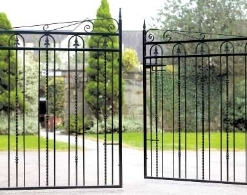
Metal railings are not as strong a barrier at first glance. The see-through style is easy to climb over. However, a wrought iron style metal railing is a strong barrier indeed. The metal used is substantial and strong. The vertical bars are close enough together to prevent climbing but still strong enough to withstand climbing attempts.
The significant difference is how these two fences hold up to an actual breach attempt. The wooden fence can easily be kicked through, cut through with a saw, or prised open. The metal railing is more resistant to these breach methods. The steel bars cannot be kicked through. The noise and effort required to cut through the metal with a saw are significant deterrents. The steel bars also cannot be prised open without significant effort and noise.

Visibility and Surveillance
A solid wooden fence provides complete obstruction of vision. Although this provides privacy, it removes the element of surveillance. The neighbours cannot keep watch over suspicious activity behind a high fence. The absence of surveillance, however, helps the criminal once he has overcome the fence. He works behind the fence, out of sight, which is supposed to keep him out.
Metal railings, however, provide visibility and define the boundaries. Any unusual activity behind the railing is quickly noticed by passersby. The constant surveillance deters criminals from attempting to break in. Studies confirm that houses with clear vision suffer fewer break-ins than those hidden behind a fence.
The psychological effect is two-way. The owner, behind the metal railing, is aware of the surroundings. He notices the visitor approaching. This is more effective in enhancing security than hiding behind a fence and hoping that nothing goes wrong.

Deterrent Value
The value of security lies in its ability to deter rather than physically withstand the criminal. The majority of criminals are not brave enough to attempt breaking into a house unless it is easy. The wooden fence, therefore, deters the criminal. It shows that the owner values privacy more than security and surveillance. The criminal, therefore, targets the house because he knows he will be working behind a fence once he has overcome the challenge of breaking through the wood. He is willing to take the challenge because he knows he will be working out of sight.
The metal railing, on the other hand, shows the owner values security and is aware of the surroundings. The house is passed over by the criminal because he knows the owner is aware and has taken the necessary precautions. The value of the metal railing is more effective than the strength of the fence.
Maintenance and Security Integrity
The value of security lies in the integrity of the boundary. The fence, regardless of the material, loses its value once it is damaged.
The wooden fencing deteriorates progressively. It starts with weakening due to rot. Next, posts become loose. Finally, a board may break. These weak points provide entry routes that may not immediately be noticeable. A loose board near the ground may provide entry, although from a distance, everything may appear fine.
Metal railings are more prone to failure. The corrosion will be visible. The damage will be obvious. This is important for the maintenance of security. The issues are addressed early enough to prevent the creation of actual security risks. The see-through quality that may be perceived as a security risk actually contributes to the maintenance of security integrity.

Aesthetic Considerations
Boundaries have an effect on the character of properties, their integration with the neighbourhood, and the ultimate value of the property. The visual effect of the boundary is dramatically different with the use of various materials.
Traditional Character
Metal railings are naturally elegant. The use of wrought iron evokes the elegance of centuries of architectural tradition. Victorian and Georgian homes, in particular, were designed with metal boundaries in mind. The use of the right metal railings will restore the traditional character to homes built during these eras.
Our Abbey, Balmoral, and Warwick ranges are examples of the aesthetics associated with traditional metalwork. The ornate features, classic style, and craftsmanship all combine to create boundaries that are complementary to rather than detracting from the heritage value of the architecture.
Wooden fencing suits various aesthetic settings. Rural homes, cottage gardens, and landscapes are all suited to the use of timber boundaries. The material makes the properties feel connected to the surrounding environment. However, wooden fencing does not have the same ability to enhance the value of the architecture as metal railings do.
Visual Weight and Openness
Metal railings are visually unobtrusive for something with such strength. The see-through quality ensures that the garden or other features are still visible. The properties look larger with the use of metal railings.
Solid wooden fencing is visually encapsulating. This may be desirable for certain purposes, such as the concealment of unsightly features or the creation of private spaces. However, the encapsulating quality makes the properties look smaller. The use of solid fencing as the boundary at the front of the property is particularly affected by this.
The difference is significant, especially with regard to property presentation. Metal railings are used to showcase properties rather than hide them. Such transparency adds significantly to kerb appeal. Estate agents always recommend metal railings rather than fencing for front property boundaries precisely for this reason.
Design Flexibility
Metal railings are flexible with regard to design. Ornate traditional designs are suitable for traditional properties. Simple designs are appropriate for modern properties. Metal railings are versatile in their adaptability to different design aesthetics while maintaining their quality attributes.
The Classic and Regent designs are examples of simple, clean-lined designs. The Saxon and Manor designs have more ornate features. Such flexibility enables metal railings to be precisely matched to architectural needs.
In comparison, wooden fencing is not very flexible with regard to design. Panel fencing is available in only three types: close board, feather board, or panel. Regardless of quality, the design scope for wooden fencing is limited.
Long-Term Appearance
Aesthetic appeal is not limited to initial appearance. How property boundaries age is significant with regard to long-term satisfaction.
In comparison to metal railings, wooden fencing looks good only at the time of installation. The fresh appearance of wooden fencing adds to property boundaries’ appeal at the time of installation. However, wooden fencing ages with time. It becomes dull and old, regardless of how well it is maintained. Such aging negatively impacts property appearance.
Metal railings improve with age, provided they are maintained well. Metal railings do not deteriorate with age. Instead, they develop character and appear classy and distinguished with time. Such aging positively impacts property appearance.
Maintenance Burden Differences
The cost of ownership is not limited to initial purchase or installation. It involves many other factors as well. Such factors are significant with regard to making informed decisions.
Time Requirements
In addition, wooden fences need constant maintenance. This includes annual treatment, which helps prevent decaying and extend their lifespan. This translates into hours of cleaning, treatment, and maintenance of fences every year. This process becomes tedious and time-consuming. If treatment is ignored, wooden fences deteriorate fast.
The maintenance time involved with metal railings is much lower. Washing with soap and water occasionally will suffice. Lubricating the hinges occasionally will ensure they continue to function smoothly. Inspection once a year will show if any damage has been done to the coating. The total time involved will still remain very low.
Skill Requirements
For proper maintenance of a wooden fence, a certain level of DIY skill is required. If not done properly, it will only mean a waste of resources with no real protective effect on the fence. Proper maintenance requires proper preparation, proper products, and proper weather conditions. However, many homeowners find it hard to fulfil these requirements.
For metal railings, maintenance requires very low skill levels. Washing requires only soap and water. Touching up with some paint will suffice for damage areas. It requires very low skill levels, making it accessible to anyone.
Cost Implications
The cost involved with maintaining a wooden fence will add up over time. If done annually, products will cost between 50-100 pounds. If done professionally, it will cost between 150-300 pounds. Considering a 20-year lifespan, it will cost much more than the original cost of the fence.
For metal railings, very low costs are involved. Touching up occasionally will require 30-60 pounds. If done professionally once every 10-15 years, it will cost 200-400 pounds. Considering a 20-year lifespan, it will cost much less than a wooden fence.
Making the Right Choice
Both options have their advantages. Neither one has a clear edge over the other.
Therefore, wooden fencing should be used in cases where privacy is of utmost importance. For instance, screening off neighbouring properties, hiding views of the road, and creating private gardens are all reasons for using wooden fencing.
Metal railings should be used in cases where security, beauty, and minimal maintenance are of utmost importance. For instance, front boundaries are best served by railings since they offer security benefits, beauty, and minimal maintenance requirements.
Hybrid options should be used in cases where there is a need for both security and open space. For instance, using railings for front boundaries and wooden fencing for backyard boundaries would offer benefits of both options in cases where they are individually appropriate.
At Wrought Iron Gates Direct, we have been providing metal railings for properties in the UK for over two decades. Metal railings offer benefits of security, beauty, and minimal maintenance requirements for properties. For this reason, they are appropriate for use in front boundaries as well as side boundaries. The different collections of railings that we offer, ranging from traditional designs such as Warwick and Henley to modern designs such as Classic and Corfe, offer options that suit every architectural style while providing benefits of beauty and security.
The choice between metal railings and wooden fencing is a delicate balance of security requirements, beauty requirements, and maintenance realities. This is important in ensuring that a choice is made that is in line with what is required rather than what is assumed to be appropriate.