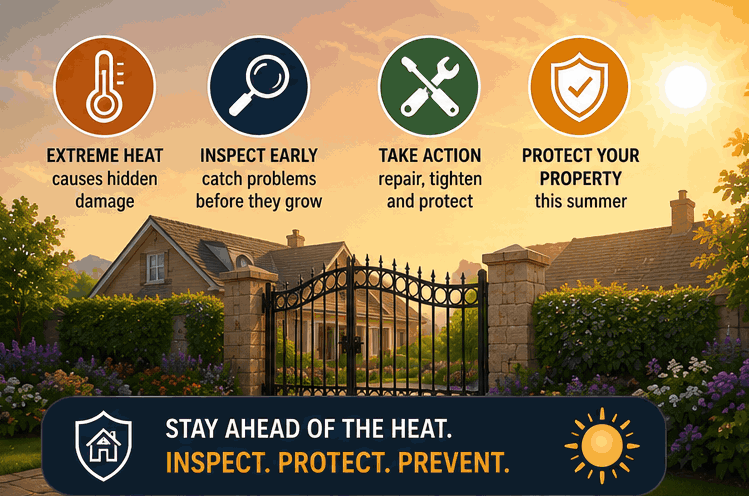


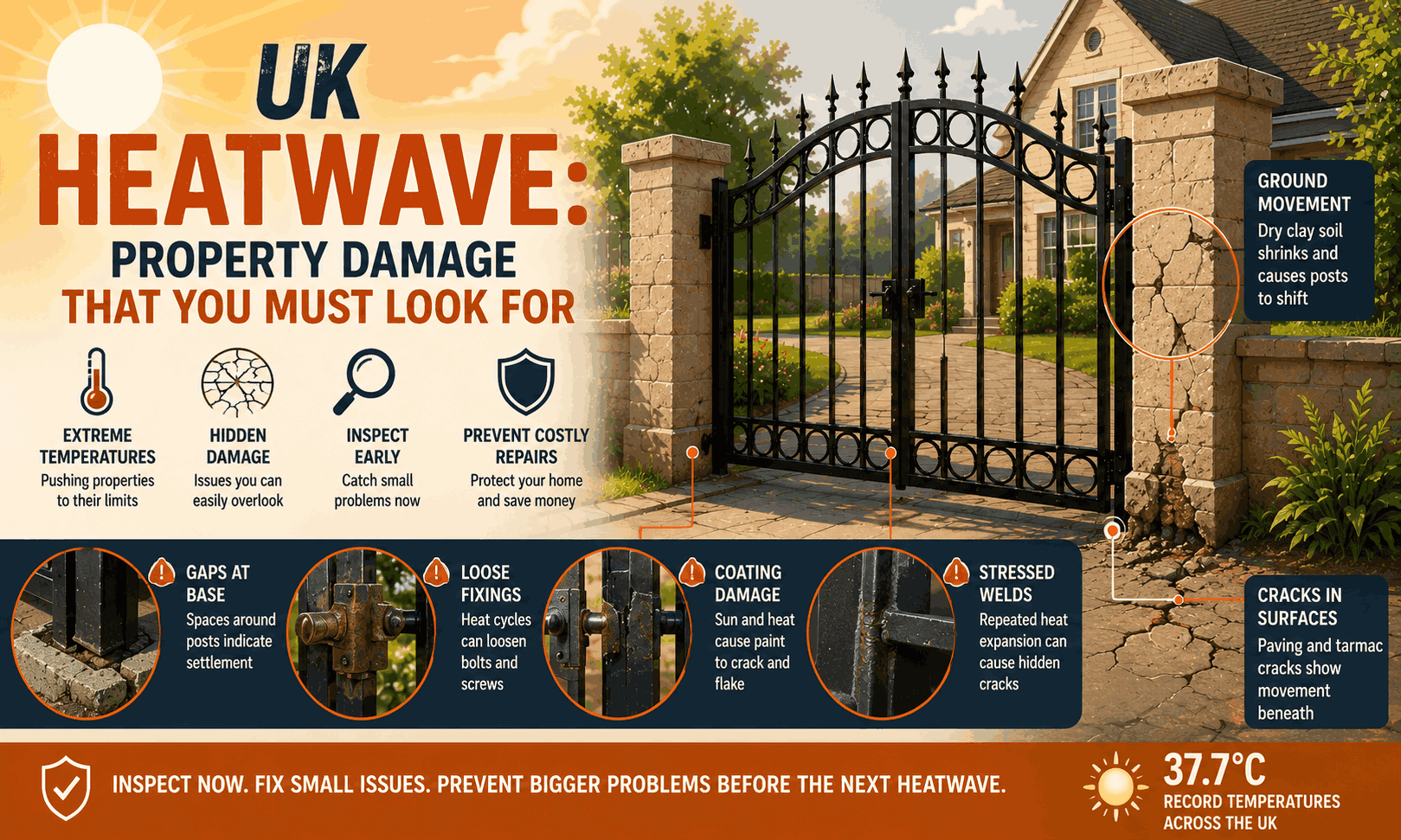
The summer of 2026 in the UK is definitely making waves! In May, temperatures climbed up to 35.1°C at Kew Gardens, thus breaking all May records that date back to 1922. In June, even more heat was recorded at 37.7°C in Norfolk and the record-breaking temperatures were registered at over 150 weather stations at the same time. Now July is delivering the third heatwave in succession in southern and eastern parts of the country without giving any sign of coming relief.
Extreme heat affects British properties in ways that we are not used to dealing with. Railway companies routinely inspect their infrastructures in case of such events. Most homeowners do the same — but only most. And while the damage done to railways is easily noticeable, damage to houses may be hard to spot. Identifying it will prevent small issues turning into big problems before the end of the season.
Ground Movement
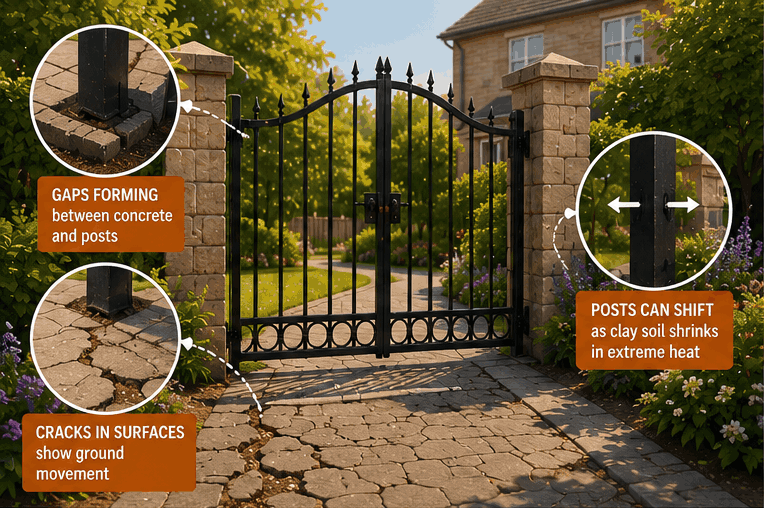
Extremely high temperatures cause fast drying of clay soils. With such kind of soil dominating the geology of the Midlands, Essex, Kent and south-eastern England, extreme drought causes quite serious shrinking. This process is not uniform and goes unevenly, causing differential ground movement.
Posts of gate and railings installed into clay soils suffer from such process badly. Inspect every post separately. Put some pressure near the top of each post in various directions. The posts that seemed rock solid in April may start moving now as their foundations got weakened due to shrinking of the ground.
Look at the ground level near each post. The gaps forming between concrete haunching and posts show that the settlement took place. These gaps did not exist before summer; therefore, their presence indicates ground movement.
The cracks appearing in the paved or tarmac surfaces adjacent to the posts tell about the scale of ground movement. Trace these cracks back to the posts and estimate whether the foundations have moved.
Structural Connections
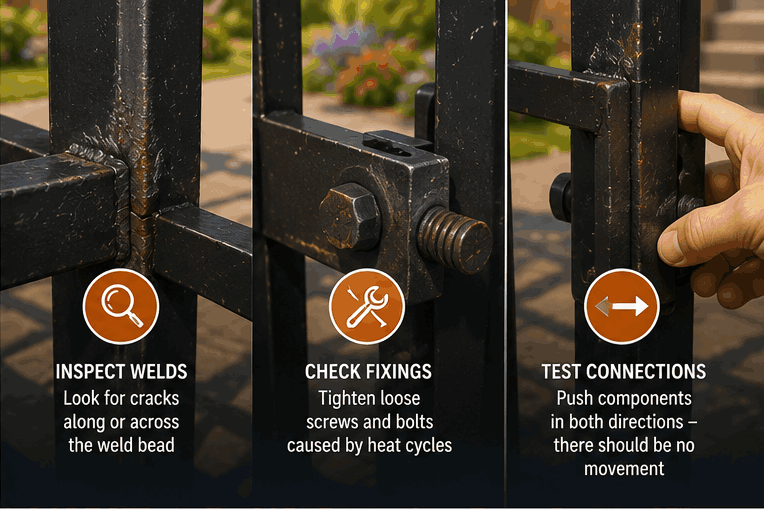
Every thermal expansion-contraction cycle of May and June put serious strain on joints, welds and fixings of the metalwork installations. Every heat-and-cool cycle stresses these connections little-by-little. Three heatwaves mean dozens of cycles of stress that loosen previously tight connections.
Test joints by putting some pressure on connecting components in both directions. If there is no movement — connections are OK. Otherwise, it means that the accumulated stress began affecting the structural integrity.
Inspect the welds visually with the help of strong light source. Crack occurring along or across weld bead appears as thin line that could be overlooked from a distance, but it should not be.
Check all fixings for tightness. Screws and bolts that move with minimal resistance were loosened due to the thermal cycles. Tighten them right away and keep checking whether they are still loosing. Persistent loosening means that the connection itself is the problem.
Action Before the Next Heatwave
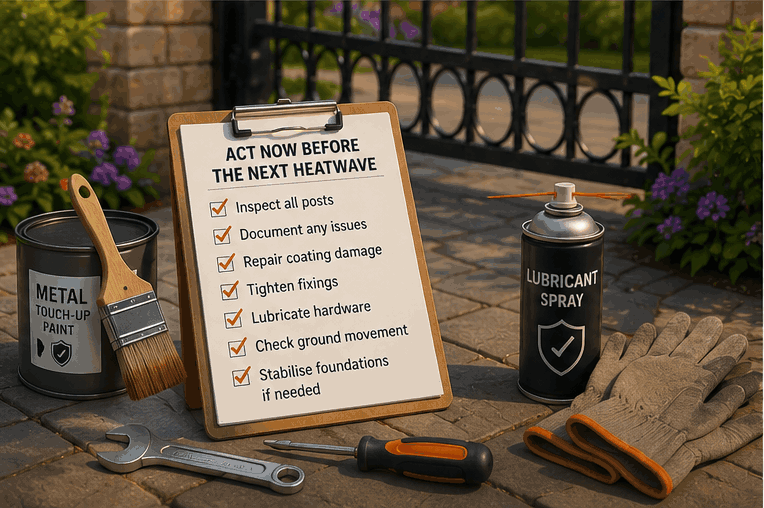
The July forecast shows more heat coming soon. Early identified problems require timely action before the next thermal wave will exacerbate them. Minor coating damages will grow bigger due to extra heating cycles. Loose fixings will loosen further. Ground movement will continue until soil will become wet again.
Here at Wrought Iron Gates Direct, we know the effects of the sequence of sustained heat on metalwork installations. The single heatwave hardly causes any damages. But the repeated ones during the whole summer cause accumulative damages that cannot be undone with regular maintenance.
Inspect now. Document your findings with photos. Repair coating damages promptly with proper touch-up treatment. Tighten loose fixings. Lubricate all operating hardware. Check posts for movement and evaluate whether foundations require stabilising against further settlement.
The 2026 summer in the UK is definitely extraordinary in any sense of this word. The property infrastructures exposed to it should receive proper inspection.