


March occupies an unusual place in the British calendar, where homeowners are forced to make crucial decisions regarding the maintenance of metal railings. It is a time when temperatures are rising but are still unpredictable. While rainfall is still possible, but there are also extended periods of dry weather. At first glance, the metalwork appears in good condition, but closer inspection reveals the effects of winter. When is the best time to apply rust prevention treatments, and should you wait until spring? This is the million-dollar question, and the answer is crucial.
The timing of rust prevention treatments can make the treatment work magnificently or completely fail. It can be like throwing your money away, protecting nothing. Conversely, treatments applied too late are just as bad, failing to prevent anything. Understanding the timing of rust prevention treatments means the treatment can be effective, rather than just hopeful.
At Wrought Iron Gates Direct, we have seen this pattern repeat itself over the last quarter of a century. Homeowners who apply rust prevention treatments in March have rust-free railings during the summer. Conversely, those who wait until "proper spring weather" arrives in May are dismayed to find that rust is already appearing. It is not the treatment, but the timing. This article explains when pre-spring treatment timing is most effective and why these weeks are so crucial.

March weather is special, and these conditions have a fundamental impact on rust prevention. Temperatures fluctuate dramatically, going from 15°C to 3°C overnight. Similarly, moisture levels are just as unpredictable. While there is dew on the metalwork in the mornings, this evaporates during the day, only to reappear at night.
This has a massive impact on rust prevention treatments. Most treatments require a minimum temperature before they can cure. Similarly, they require the surface to be sufficiently dry for adhesion but mild enough for application. March offers these conditions sporadically.
However, March offers critical advantages April and May don’t. Surface rust hasn’t yet established itself aggressively. Whatever rust there is, it is surface and hasn’t penetrated deeply. Coatings applied at this time of year bond with metal that is at least partially sound. Applying coatings too late, come May, often means applying them over progressed rust that continues to progress under new coatings.
The sweet window of opportunity is late March and early April. Temperatures are reliably above minimum treatment temperatures. Prolonged dry periods are measured in days, not hours. However, railings have yet to endure the aggressive progression of rust typical of spring. This window is fleeting, and failure to take advantage of it forces a wait for autumn and its second chance.
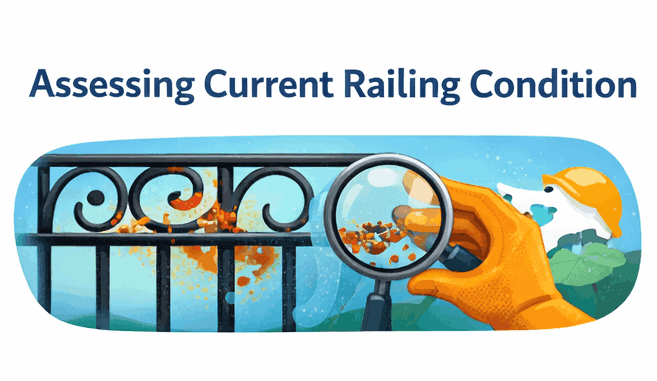
Before timing any treatments, it is essential to determine what state of repair railings are actually in. Not all situations are appropriate for pre-spring treatments.
Systematically inspecting railings under good lighting is essential. Inspect for signs of surface rust, manifesting as orange-brown discoloration. Light surface rust is ideal for pre-spring treatments. Heavier rust, with flaking and pitting, is beyond what preventive treatments can correct.
Coatings should also be inspected for integrity. Pass hands over all surfaces, feeling for rough spots, bubbling, and other signs of failed coatings. Coatings with minor failures can work with preventive treatments. Coatings with significant failure need refinishing, not preventive treatments.
Welds, decorative elements, and any other locations where water tends to collect should also be inspected. These are often where rust first begins. If rust is evident and concentrated in these areas, but the rest of the railing is in good health, targeted treatments can work. However, if rust is evident throughout, it is likely too late for preventive treatments.
Adhesion of the coating can be tested by pressing firmly on the suspect areas. If the coating adheres well, it will be hard all over. If the coating is not adhering well, it will have movement or be soft when pressed. If the coating is loose, it will not take more treatments well and should be removed.
For railings with active rust, rust converter products will be used as a first coating. They will stabilise the rust before the protective coating is applied. The rust converters will chemically change the rust into a form which will accept the subsequent coating.
Complete drying must be ensured before the application of the treatment. If the metal surfaces are damp, the oil-based treatment will not adhere. If the surfaces have water beading, it indicates that the drying time has not been adequate. Longer drying time will be allowed.
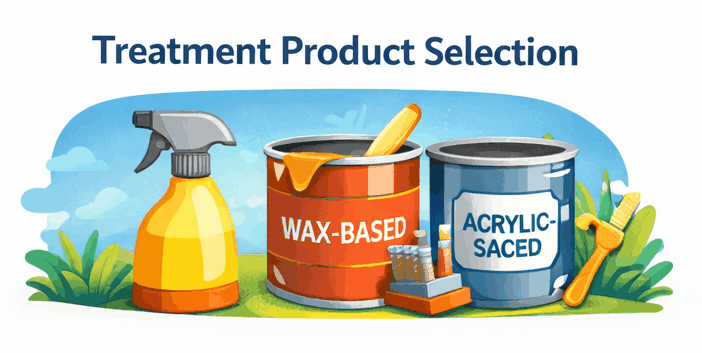
For the prevention treatments, different products will be used for different conditions and timing windows.
Oil-based rust prevention treatments will be used for the project. They will be excellent for the March timing window. Oil-based rust prevention treatments will penetrate the imperfections of the surfaces, drive out moisture, and form a protective film. The oil-based treatments will perform better under less than perfect conditions.
Wax-based treatments will also be used for the project. They will be excellent for the April timing window. The wax-based treatments will provide excellent moisture protection. However, the temperature for the application of the wax-based treatments will be higher than the temperature required for the oil-based treatments.
Acrylic-based rust inhibitors will also be used for the project. The acrylic-based rust inhibitors will be excellent for the March timing window. The acrylic-based rust inhibitors will cure fast and will perform well under a wide range of temperatures. The acrylic-based rust inhibitors will be better for the March timing window because the March weather will be more unpredictable.
For our Abbey, Balmoral, Manor, and Saxon railing collections, oil-based rust prevention treatments will be used. The wrought iron style construction will have many areas where the oil-based rust prevention treatments will penetrate.

Know what the preventive treatment does and does not do.
Properly applied preventive treatment should stop new rust formation until the end of the growing season. It does not touch existing rust damage, only prevents new damage.
Properly treated railings should have water running off. Beading of water off the surface means the treatment was successful. Water soaking into the surface means the treatment was not successful.
Protection should last 12-18 months before re-treatment is necessary. Some paints claim longer, but the British weather is quite hard on coatings.
Check the railing during the months of spring and summer. Check for rust breakthrough, which means the treatment failed.

There are some situations that go beyond the capability of DIY preventive treatments.
If there is already a great deal of rust present, for instance, then it will be necessary to bring in the professionals to remove the rust and re-coat the railing.
If the railing is very high or in a difficult position to access, then it will be necessary to call in a professional to treat your railing. Safety comes first – not saving money!
If your railings are old and in a period property in a conservation area, there may be special treatments required. A professional in the business of conservation will be better informed about the requirements for your railings than a general contractor.

If you treat your railings in late March, they will be in great shape to face the harsh conditions of the rust season. If you wait until later or don’t treat your railings at all, they will be in for a losing battle to prevent the effects of corrosion that will be accelerating rapidly.
At Wrought Iron Gates Direct, our railings have protective coatings applied at the factory. If you undertake pre-spring preventive treatments, they will have a dramatic effect in extending the life of the coating. The timing to take advantage of this is critical because the damage to your railings during the winter will be followed by a short window before the rust season starts. The decision you make in March will have to last your railings all year.
So make the right choice – treat your railings during the sweet spot of the season and enjoy your rust-free railings during the summer.